
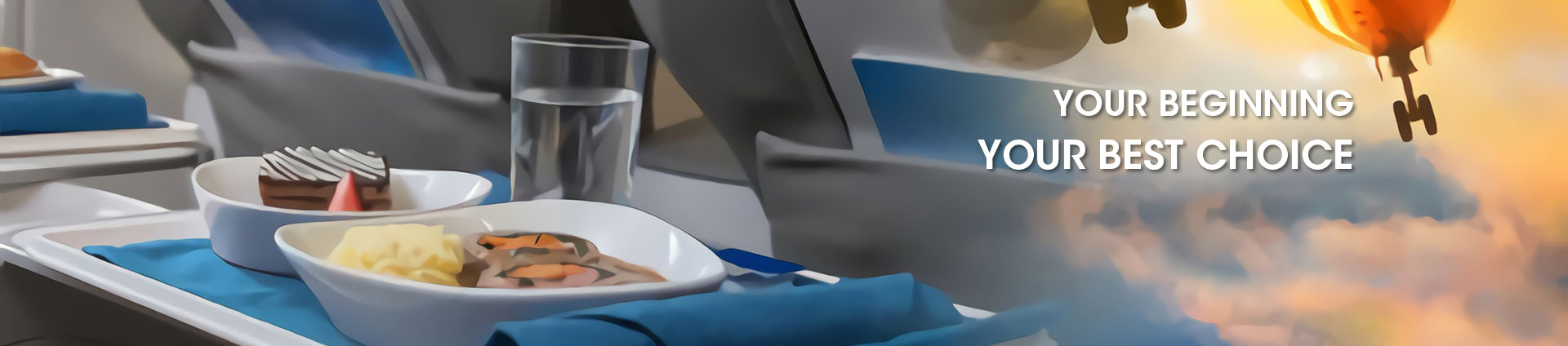
Airline amenity kits may be small, but they play a noticeable role in how passengers experience a cabin. A pouch containing a few carefully selected travel essentials can reinforce an airline's service positioning, while the material, packaging, branding, and contents all contribute to how passengers perceive the value of the product.
For airlines operating both economy and premium economy cabins, however, using exactly the same kit across both classes may not always make sense. An economy class amenity kit generally needs to balance practical contents, efficient packaging, and volume procurement, while a premium economy amenity kit may require more attention to material quality, presentation, and the perceived value of the items included.
The distinction does not mean that every element has to be completely different. With the right procurement strategy, airlines can maintain a recognizable brand identity across both cabins while adjusting the contents, pouch construction, finishing, and customization level to match each passenger segment.
How Do Economy and Premium Economy Amenity Kit Contents Differ?
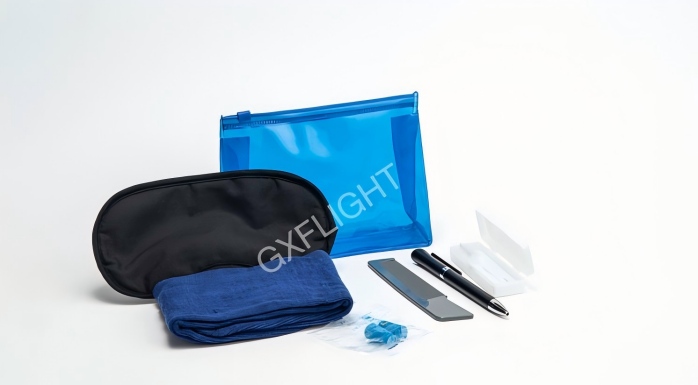
The contents of an amenity kit should reflect what passengers are likely to use during the journey as well as the service level associated with the cabin. Economy-class kits generally focus on practical travel essentials. Depending on the airline's route and service concept, these may include items such as an eye mask, socks, toothbrush, toothpaste, earplugs, or other basic personal-care accessories.
An economy class amenity kit does not necessarily need a long list of products to be useful. In fact, including too many low-value items can make the kit unnecessarily bulky while increasing packaging requirements and procurement complexity. A more focused selection can make the product easier to use and easier for airlines to manage at scale.
A premium economy amenity kit can take a different approach. Passengers in this cabin are generally offered a service experience positioned between economy and business class, so the kit can provide a noticeable step up without attempting to replicate a full business-class amenity package. The difference may come from better-quality travel accessories, more refined packaging, or a pouch that passengers are more likely to keep and reuse.
| Procurement Factor | Economy Class Amenity Kit | Premium Economy Amenity Kit |
|---|---|---|
| Primary Objective | Practical passenger essentials | Practicality combined with enhanced presentation |
| Contents | Essential travel and personal-care items | Selected essentials with upgraded or additional items |
| Pouch Material | Lightweight and cost-efficient materials | More refined textiles or reusable materials |
| Branding | Clear and efficient brand application | More detailed or premium-looking brand execution |
| Packaging | Compact and efficient | Greater emphasis on presentation and reusability |
| Procurement Priority | Consistency, volume, and cost control | Quality, customization, and perceived value |
The exact contents should ultimately be determined by the airline's route network, flight duration, passenger profile, and service concept rather than by cabin class alone. The purpose of the distinction is to create an appropriate level of value without creating unnecessary complexity.
Which Materials and Packaging Options Suit Each Cabin Class?
Material selection is one of the most visible differences between economy and premium economy amenity kits. The pouch itself is often the part passengers keep, touch, and see throughout the journey, so its material can influence the perceived quality of the entire kit.
For an economy class amenity kit, airlines may prioritize lightweight fabrics and straightforward constructions that are suitable for efficient large-volume production. Nonwoven materials, polyester-based fabrics, or other practical textile solutions can be considered depending on the desired appearance, durability, and budget.
Premium economy provides more room for material differentiation. A premium economy amenity kit may use a denser textile, recycled material, canvas-style fabric, faux leather, or another customized construction when the objective is to create a pouch with a stronger reusable character. The right choice depends on the airline's brand positioning and the intended passenger experience.
Packaging deserves similar attention. An economy kit may use compact packaging designed to minimize unnecessary material and storage volume. A premium economy version can use more visually refined packaging when presentation is part of the product concept.
Airlines should nevertheless consider the entire supply chain. A more elaborate pouch may look attractive during product development but can introduce additional material sourcing, sewing, printing, inspection, and packaging requirements. The best solution is one that improves the passenger experience without creating disproportionate operational complexity.
How Should Amenity Kit Design and Branding Vary by Cabin Class?
Cabin differentiation does not necessarily require completely different branding. In many cases, airlines can use the same visual identity while adjusting the execution to create a clear distinction between economy and premium economy.
An economy kit may use the airline's primary brand colors and logo in a straightforward layout. The pouch should remain visually clean, easy to recognize, and practical to manufacture. A simple design can also make repeat procurement easier when the airline needs to replenish large quantities.
For a premium economy amenity kit, branding can become more subtle and design-led. Instead of placing a large logo prominently on the front, an airline might use a smaller logo, tonal branding, a custom pattern, branded zipper pulls, woven labels, or carefully selected color combinations. These details can make the kit feel more premium without turning it into a completely separate brand identity.
Airlines should also think about how the kit fits into the wider cabin environment. The color and material of the pouch can be coordinated with blankets, headrest covers, pillows, meal-service accessories, or other passenger amenities. When these details work together, the cabin can feel more consistent even when individual products come from different suppliers.
This approach is particularly useful for airlines that want their economy class amenity kit and premium economy amenity kit to feel related but not identical. A shared visual language can maintain brand recognition, while differences in material, finishing, and contents communicate the distinction between service levels.
What Customization Options Are Available for Economy and Premium Economy Kits?
Customization can range from a simple logo application to a completely developed kit designed around an airline's passenger experience. The appropriate level depends on the purpose of the kit and the procurement volume.
For economy class, customization often begins with the pouch dimensions, fabric, color, logo, printing method, and internal packaging. Airlines may also customize the contents to reflect specific routes or passenger requirements. Because the quantities can be substantial, production consistency is particularly important.
A premium economy amenity kit offers more opportunities to differentiate the product through material and construction. Zipper design, compartments, lining, labels, handles, surface finishing, and reusable pouch structures can all be considered during product development. The airline may also select a more distinctive combination of accessories to create a stronger sense of value.
Customization should begin with the intended passenger experience rather than with decoration alone. If the pouch is expected to be reused after the flight, for example, its dimensions, durability, closure method, and internal organization become more important than simply adding additional branding.
It is also worth confirming production details early. Artwork specifications, material availability, color matching, sample approval, packaging, and quality inspection can all affect the production schedule. Clear specifications at the development stage help reduce changes once mass production begins.
How Do Cost and Quantity Requirements Differ When Airlines Procure These Kits?
Procurement strategy can be quite different between economy and premium economy because the two cabin classes may have different passenger volumes and different expectations for the product.
For an economy class amenity kit, airlines generally need to pay close attention to cost per unit because the product may be distributed across a much larger passenger population. Even relatively small differences in material usage, packaging, or accessory selection can become meaningful when multiplied across repeated orders.
This makes standardization valuable. Using a stable pouch construction and a controlled selection of contents can simplify purchasing, inventory management, quality inspection, and replenishment. It can also make it easier to maintain the same passenger experience across multiple flights and routes.
Premium economy procurement may place greater emphasis on product differentiation. The airline may accept a more complex pouch or higher-grade material when those features support the positioning of the cabin. However, the additional cost should still correspond to something passengers can recognize, such as better usability, more durable construction, or a more attractive reusable design.
Rather than looking only at the unit price, procurement teams should consider the complete cost of the kit. Material consumption, accessories, packaging, shipping volume, inspection, storage, and replacement requirements can all influence the actual procurement impact.
What Should Airlines Consider When Sourcing Amenity Kits for Both Cabin Classes?
When an airline needs both economy and premium economy kits, the most efficient approach is usually to establish the common requirements first and then identify where the two products genuinely need to differ. This avoids creating unnecessary variations while preserving a clear distinction between cabin experiences.
The airline should define the intended contents, pouch dimensions, materials, branding, packaging, and quality expectations for each cabin. It is also useful to establish which components can remain consistent. For example, an airline may use the same basic toothbrush or eye mask in both kits while differentiating the pouch and a small number of selected accessories.
Supplier capability is equally important. An amenity kit supplier should be able to manage both straightforward high-volume production and more customized premium products without compromising consistency. Sample development is particularly valuable when the airline is testing different materials or pouch constructions.
For procurement teams comparing potential products, reviewing the GXFLIGHT aviation product range can help put amenity kit requirements into the context of the airline's broader cabin-service needs. This is useful when the airline is developing several passenger-facing products and wants the materials, colors, and branding to work together rather than treating each item as a separate purchase.
Once the airline has established the required contents, pouch construction, branding, estimated quantity, and cabin application, those details can be used to request a more specific proposal. Airlines developing both an economy class amenity kit and a premium economy amenity kit can discuss their amenity kit specifications with GXFLIGHT when they need to review customization, samples, packaging, or quotation requirements.
This stage is particularly important for customized projects because a supplier needs to understand more than the desired appearance. Information about the intended route, passenger service level, pouch dimensions, material preference, estimated order volume, and packaging method can help the supplier develop a solution that is practical to manufacture as well as attractive to passengers.
Conclusion
The difference between an economy and premium economy amenity kit is not simply the number of items included. The more important distinction is how the kit balances usefulness, material quality, presentation, customization, and procurement requirements for each cabin.
An economy class amenity kit generally benefits from practical contents, efficient packaging, consistent production, and sensible cost control. A premium economy amenity kit can place more emphasis on upgraded materials, reusable pouch construction, refined branding, and a stronger sense of passenger value.
For airlines serving both cabins, the goal is not necessarily to create two completely unrelated products. A well-planned procurement strategy can retain common brand elements while introducing meaningful differences in materials, contents, and finishing. By defining these requirements clearly and working with a supplier capable of handling both standard and customized production, airlines can create amenity kits that support their cabin positioning without adding unnecessary complexity to the supply chain.
Frequently Asked Questions
1. What is the main difference between an economy class amenity kit and a premium economy amenity kit?
An economy class amenity kit generally focuses on practical travel essentials and efficient procurement, while a premium economy amenity kit can place greater emphasis on upgraded materials, presentation, and reusable design.
2. Can the same amenity kit contents be used in both cabins?
Yes. Airlines can use some common contents across both cabins while differentiating the pouch, packaging, selected accessories, or material quality.
3. What materials can be used for airline amenity kit pouches?
Depending on the design, airlines can consider nonwoven materials, polyester fabrics, canvas-style textiles, recycled fabrics, faux leather, and other customized textile constructions.
4. How can airlines make premium economy kits look different?
Material quality, pouch construction, subtle branding, color combinations, zipper details, internal compartments, and reusable designs can all create a more premium appearance.
5. Should economy amenity kits always be cheaper?
Not necessarily, but economy kits often place greater emphasis on cost-efficient production because they may be procured in higher volumes. The final specification should reflect the airline's service strategy and procurement requirements.
6. What should airlines provide when requesting customized amenity kits?
Useful information includes the cabin class, intended contents, pouch dimensions, material preferences, branding artwork, packaging requirements, estimated quantity, and target passenger experience.