

Aircraft cabins are designed around specific operational requirements. The aisle width, galley position, seating arrangement, flight duration, and passenger service model all influence how cabin crews complete daily tasks. Among the equipment used during onboard operations, the airline trolley cart is one of the most important tools for organizing and delivering meals, beverages, and service supplies efficiently.
However, choosing an airline trolley cart is not simply about selecting a model with the largest storage capacity. Different aircraft configurations create different challenges. A narrow-body aircraft operating short domestic routes may require a compact and highly maneuverable trolley, while a wide-body aircraft used for long-haul international flights may need greater capacity to support multiple service cycles.
GXFlight provides aviation equipment solutions designed for different cabin operation scenarios. By considering aircraft layout, service requirements, and operational conditions, airlines can explore suitable options through GXFlight’s aircraft cabin equipment solutions and identify equipment that fits their specific needs.
The cabin layout determines how an airline trolley cart performs during flight operations. Although aircraft cabins may appear similar from the passenger perspective, differences in aisle dimensions, galley locations, and seating arrangements can significantly affect trolley movement and service efficiency.
For single-aisle aircraft, space utilization is a major consideration. Cabin crews often work within limited aisle areas, meaning the trolley must move smoothly between passenger rows without creating unnecessary obstacles. A compact plane trolley with practical storage capacity can help crews complete meal and beverage services efficiently, especially on shorter flights where turnaround time is important.
Wide-body aircraft provide more cabin space, but their service requirements are often more complex. Longer flights usually involve multiple meal services, additional beverage distribution, and larger quantities of onboard supplies. In these situations, an airline trolley cart with optimized storage capacity can reduce the need for repeated trips between the galley and passenger areas.
The key consideration is finding a balance between available cabin space and operational efficiency. A trolley that fits the aircraft environment allows crew members to work more comfortably while maintaining smooth passenger service.
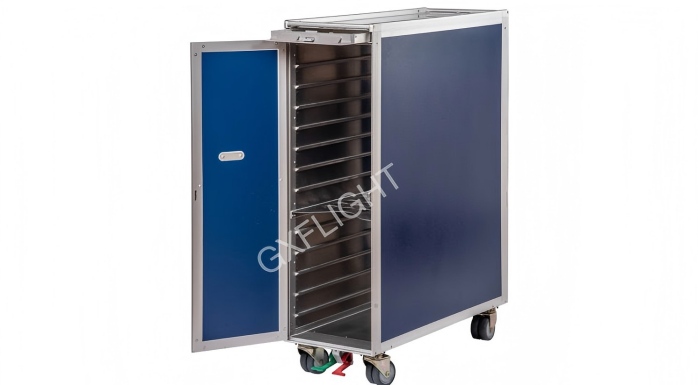
Aircraft type and flight operation determine what kind of plane trolley is most suitable. Airlines operating different routes often require different trolley characteristics because service patterns vary significantly.
| Aircraft Operation | Recommended Plane Trolley Characteristics | Main Considerations |
|---|---|---|
| Regional and short-haul flights | Compact, lightweight, easy-to-move trolley design | Fast service, frequent movement, limited cabin space |
| Narrow-body aircraft | Standard-size airline trolley cart suitable for single aisles | Aisle compatibility, storage efficiency, crew handling |
| Long-haul wide-body aircraft | Higher-capacity trolley configuration | Multiple service rounds, larger passenger volume |
| Premium cabin service | Flexible storage and refined appearance | Passenger experience and service presentation |
For example, a regional airline may prioritize quick handling because flights are shorter and service windows are limited. In contrast, international carriers may focus on maximizing onboard organization because long flights require more supplies and longer service procedures.
A suitable plane trolley should match the airline’s actual workflow instead of following a one-size-fits-all approach. The right choice depends on how the equipment will be used during daily operations.
The dimensions of an airline trolley cart directly affect its usability inside an aircraft cabin. Since cabin space is carefully optimized, even small differences in trolley size can influence crew movement and service efficiency.
Width is one of the most important factors because the trolley must pass through aircraft aisles while avoiding interference with passengers and seats. Height and depth also affect storage capacity and handling comfort, especially when crews need to access supplies quickly during service.
Weight is another important consideration. A lighter trolley can reduce physical effort during repeated movement, while a strong structure helps ensure reliable performance during frequent daily use. Airlines typically look for equipment that combines durability with easy operation.
The ideal plane trolley is not necessarily the largest one available. Instead, it should provide enough storage space while maintaining smooth movement throughout the cabin.
Storage capacity and maneuverability are two factors that must be carefully balanced when selecting an airline trolley cart. More storage space can improve efficiency by allowing crews to carry more supplies at one time, but excessive size may make movement more difficult in a busy cabin environment.
Airlines usually evaluate several practical factors, including passenger numbers, flight duration, meal service frequency, galley storage availability, and crew workflow. These considerations help determine whether a compact trolley or a higher-capacity model is more suitable.
For short flights, a lightweight plane trolley may provide better operational flexibility because service needs are simpler and time is limited. For long-distance routes, a larger trolley may be more effective because cabin crews need to manage more extensive service requirements.
The best airline trolley cart is the one that supports efficient operation without creating unnecessary challenges for cabin crews.
Passenger expectations continue to influence how airlines design onboard services. Beyond simply delivering food and beverages, modern cabin operations focus on improving efficiency, organization, and overall passenger experience.
Different service models require different trolley features. Economy-class operations may prioritize practical storage and fast distribution, while premium cabins may require more flexible organization to support personalized service.
A well-designed airline trolley cart helps cabin crews keep supplies organized and reduces unnecessary movement during service. When everything is stored logically and easily accessible, crews can focus more on providing a smooth passenger experience.
GXFlight works with aviation operators looking for reliable cabin equipment solutions. Airlines that need assistance selecting suitable equipment based on aircraft requirements can reach out through GXFlight’s aviation equipment consultation page.
An airline trolley cart affects more than onboard storage. It influences how cabin crews move, how quickly services are completed, and how efficiently daily flight operations are managed.
When trolley dimensions match the aircraft environment, crews can move through aisles with fewer interruptions. Proper storage organization also reduces the time needed to prepare and deliver passenger services.
For airlines operating multiple aircraft types, selecting compatible plane trolley solutions can help create more consistent workflows across different routes. Equipment that fits naturally into cabin operations supports both crew efficiency and passenger satisfaction.
Ultimately, trolley selection should be considered as part of the overall cabin operation strategy rather than as a simple equipment purchase.
Choosing the right airline trolley cart requires careful consideration of aircraft configuration, service requirements, trolley dimensions, and operational workflow. Different aircraft types create different challenges, and the most suitable solution depends on how the equipment will be used during actual flights.
A properly selected plane trolley helps airlines improve cabin organization, support crew efficiency, and maintain consistent passenger service quality. By balancing storage capacity with maneuverability, airlines can create smoother and more effective onboard operations.
With aviation equipment experience and solutions designed for different cabin environments, GXFlight helps operators identify suitable equipment options based on their operational needs.
An airline trolley cart is used for onboard service activities such as meal distribution, beverage service, and storage of cabin supplies. It helps cabin crews organize and deliver items efficiently during flights.
Aircraft type affects trolley selection because cabin space, aisle dimensions, galley design, and service requirements vary between aircraft models. A suitable plane trolley should match the specific cabin environment.
Trolley dimensions determine how easily equipment can move through aisles and service areas. Proper sizing improves handling efficiency and helps maintain smooth cabin operations.
Not necessarily. A larger trolley provides more storage but may reduce maneuverability. Airlines should choose an airline trolley cart that balances capacity with practical operational needs.
Airlines should consider aircraft compatibility, trolley size, weight, storage requirements, durability, and daily service workflow when selecting a plane trolley.
The right airline trolley cart improves workflow by making supplies easier to organize, reducing service difficulties, and helping cabin crews complete onboard tasks more efficiently.